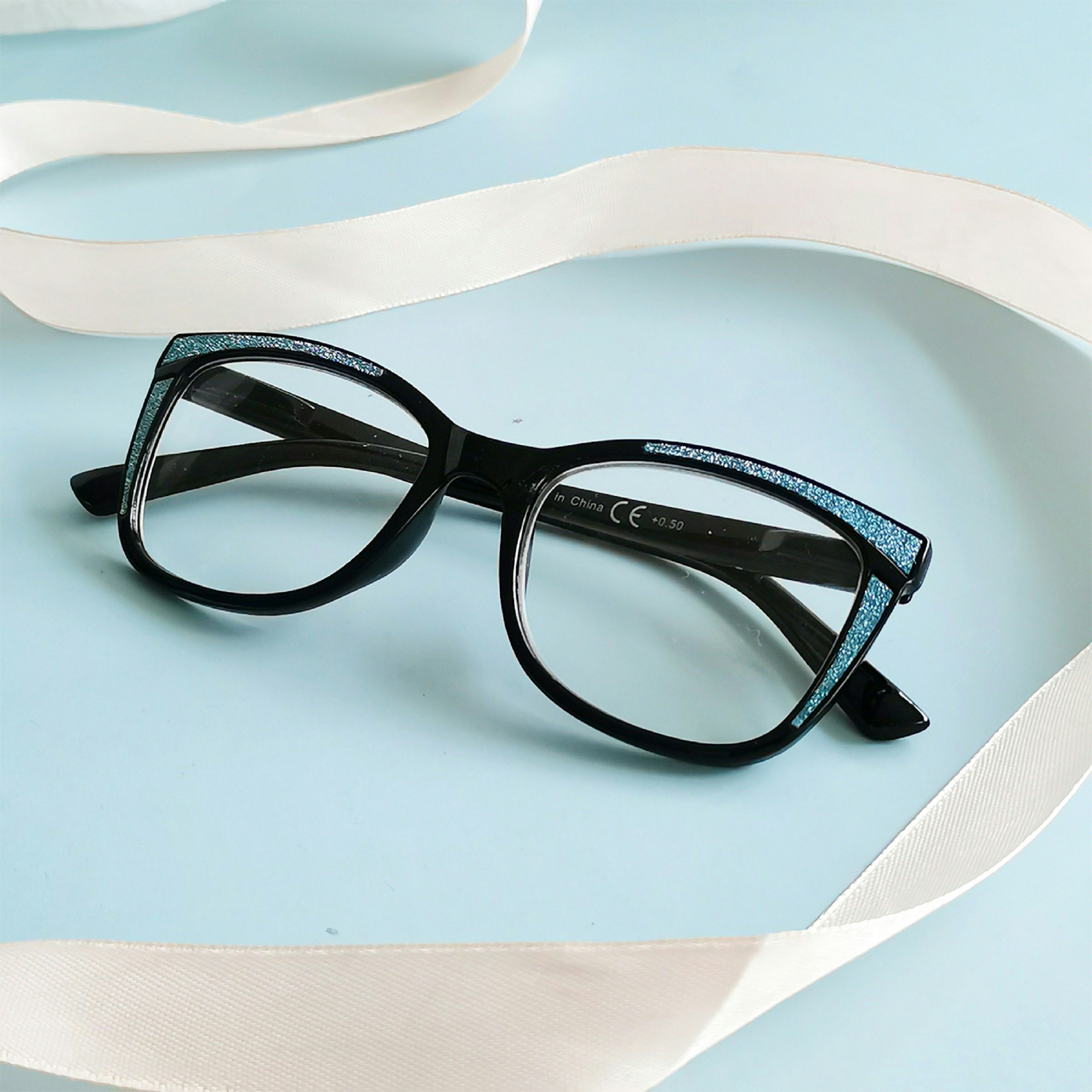
Every other guide to choosing reading glasses will tell you about diopter strength. This one covers the question that follows — the one nobody answers: once you know your strength, how do you choose frames that actually flatter you?
The goal of a well-chosen frame is not to express personality. It is to make your face more coherent. A frame that works with your bone structure does this without drawing attention to itself. A frame that works against it announces itself every time you wear it.
Oval faces are the rarest and most fortunate — almost any frame proportion works. If you have an oval face, your constraint is not shape but scale: the frame should sit within the width of your face, neither wider nor significantly narrower.
Round faces benefit from frames with horizontal weight — a slight rectangle, a gentle cat eye, anything that introduces a line the face does not naturally have. Perfectly round frames on a round face create a doubling effect that tends to read as costume rather than style.
Square faces — strong jaw, pronounced temples — are softened by curved frames. A gentle oval or a rounded rectangle does the work quietly. The mistake most square-faced women make is choosing frames that match the angularity of their features rather than providing contrast to it.
Warm skin tones — olive, golden, peachy — are served by tortoiseshell, warm browns, and gold metal. Cool tones — pink undertones, fair skin — suit black, silver, and cool-toned acetates. This is not a rule to follow rigidly but a starting point that eliminates most wrong choices before you try anything on.
The frame colours that photograph well are not always the ones that look best in person and in motion. When in doubt, warm tones tend to be more forgiving across a wider range of situations.
Lorgner helps you style the collection you have already built. Tell Lorgner the occasion — receive a considered recommendation for which pair to wear.
Consult Lorgner →Reading glasses are unusual in that most women own several pairs worn in different contexts. The pair at your desk sits differently in your consciousness than the pair you pull from your bag at a restaurant. Choosing them as a wardrobe — rather than a single purchase — is how you stop compromising.
The reading glasses worth giving careful thought to are not the ones on your nightstand. They are the ones you wear when other people can see you wearing them. Start there.